Portrayals of death contained in this room include two different artists' interpretations of Christ's Descent from the Cross, painted roughly 90 years apart, in two very different regions of Europe and in two very different styles; a woodcut of the Danse Macabre, or Dance of Death, from the Nuremberg Chronicle, an encyclopedia of world history and Bible stories published in Germany in 1493; another woodcut depicting the Four Horsemen of the Apocalypse, from the Book of Revelation, which was part of a larger series titled Apocalypse; two women working together to righteously slay a powerful man; and an anatomy lesson that takes the form of a communal human dissection. Toward the very end of this period is the time at which something we might now recognize as akin to "modern medicine" was just beginning to emerge. Death in Europe during the Renaissance and Early Modern periods was much more commonplace and obvious as a part of everyday life than it is today, with our livesaving drugs and technologies. This, in addition to how deeply Christian Europe was compared to our more secular modern world, means it is not at all surprising how widespread the subject of death was in major artworks of the time. After all, Jesus would not have been the Christian savior if he had not died for the sins of mankind.
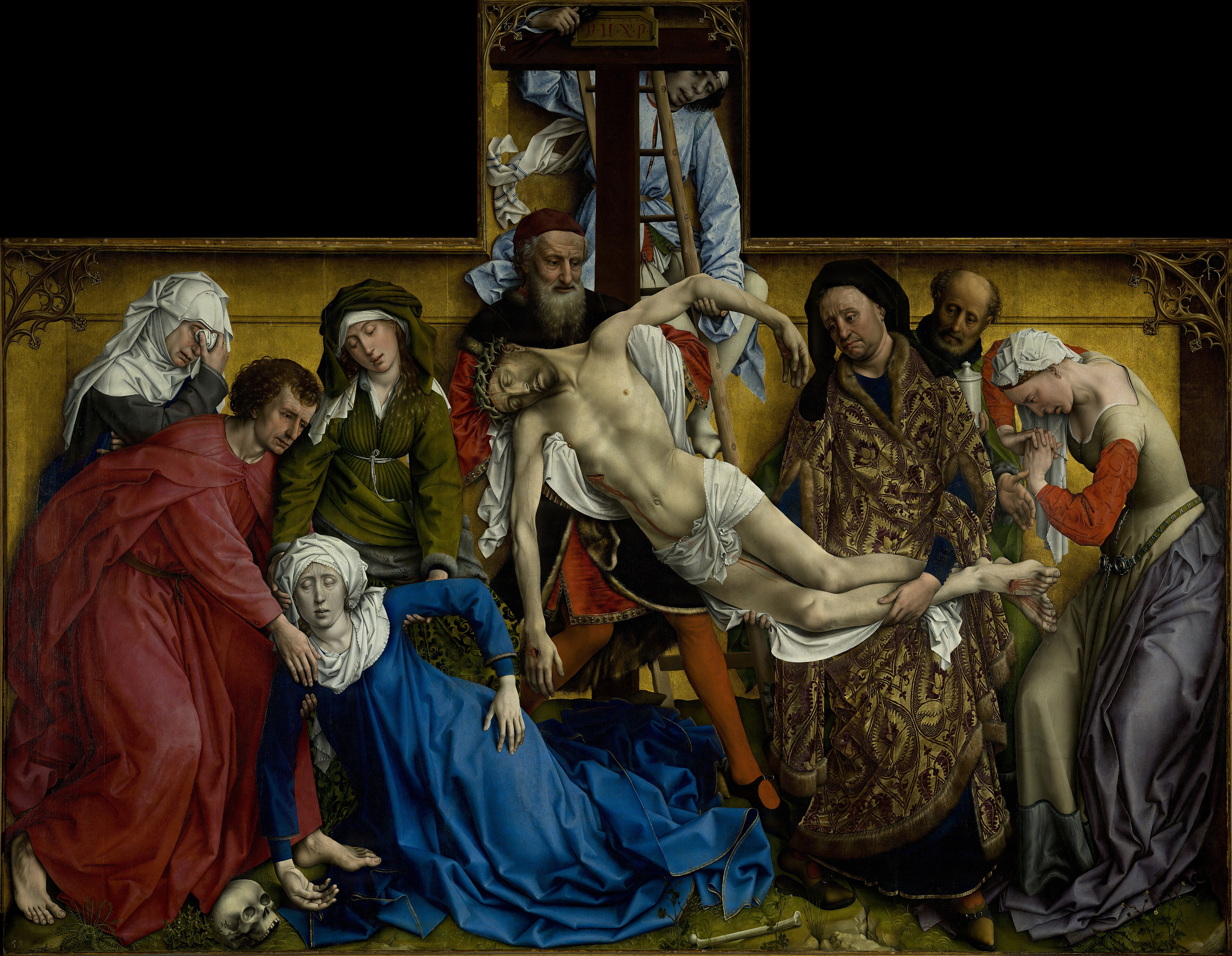
In this scene of the Deposition, or Christ's Descent from the Cross, Rogier van der Weyden depicts a highly emotional, deeply human view of Christ and his death. During the time period that van der Weyden painted this, "morality plays," or plays based on Bible stories, were a common form of entertainment for people of all classes, often performed on public streets in order to present the stories to the masses, or in more private settings for the upper classes. The box-like atmosphere of this painting evokes the stage that such plays would be performed on, while the figures' highly charged, dramatic emotional states likewise bring to mind theatricality. The painting is very large, with figures around life size, and Van der Weyden did not shy away from showing the intensity of grief within the scene, emphasizing the humanity of the Biblical characters depicted within it, while the clothing worn by the figures is contemporary to the time period, further emphasizing the commonality between Biblical figures and the viewers who would have seen this painting during the artist's lifetime.
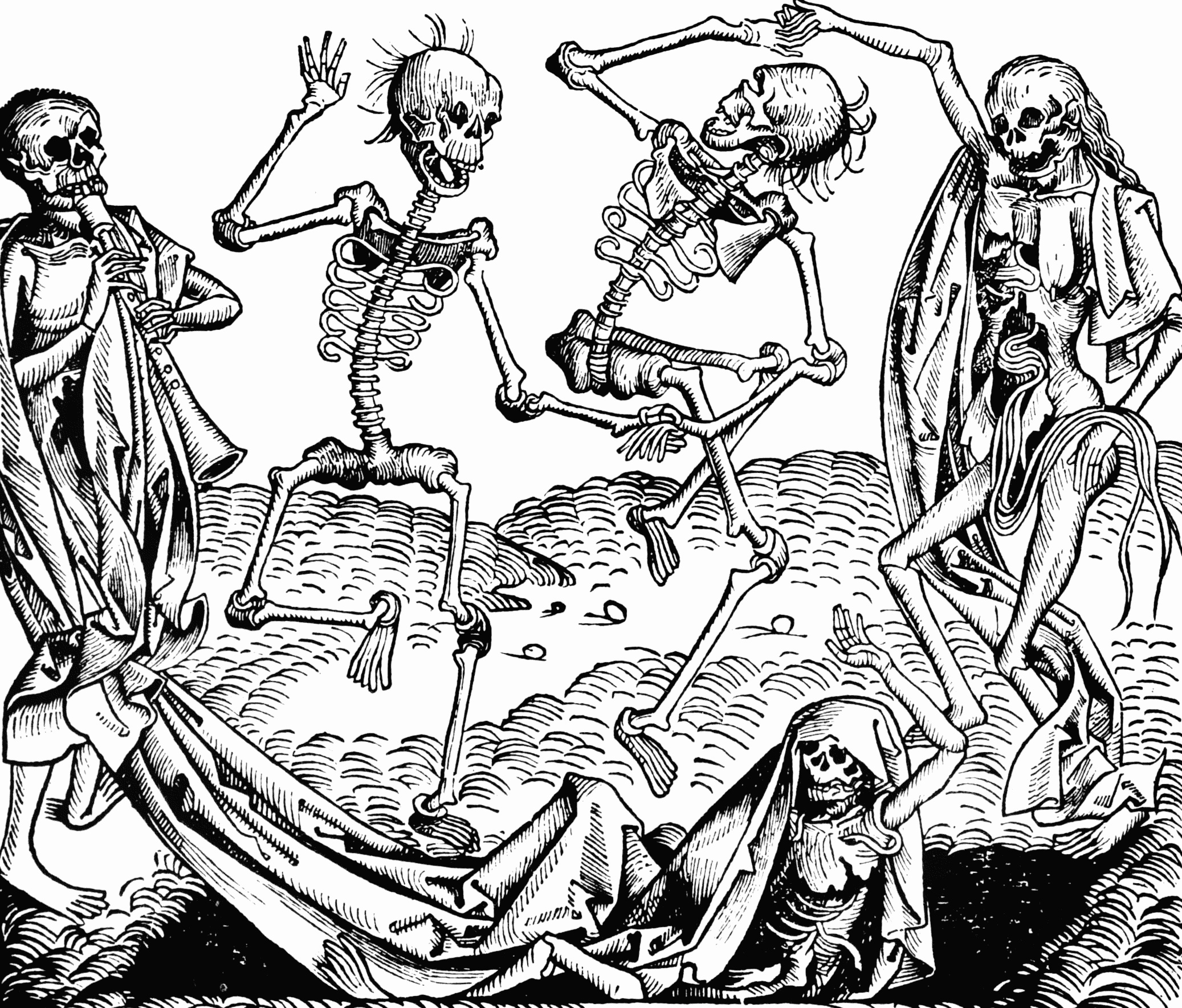
Michael Wolgemut was the teacher of famed German printmaker and painter Albrecht Dürer. Wolgemut, also Nuremberg's most important painter at the time Dürer was apprenticed to him, designed numerous woodcuts, mostly as book illustrations, for clients such as Anton Koberger, one of Europe's foremost book publishers. In this 1493 woodcut print, published in the Nuremburg Chronicles, he depicts skeletons rising from their graves and dancing in apparent joy. The Danse Macabre, or Dance of Death, was a popular subject in medieval art and manuscripts. Death was as much a part of life during this time as any other aspect of the human experience, and people were (as we still are) preoccupied with questions about what happens to us after our deaths, although in the Renaissance Christian context, with a dogmatic certainty of heaven, hell, and purgatory, the questions were more about "which" would happen, rather than "what" would happen, to people in death.
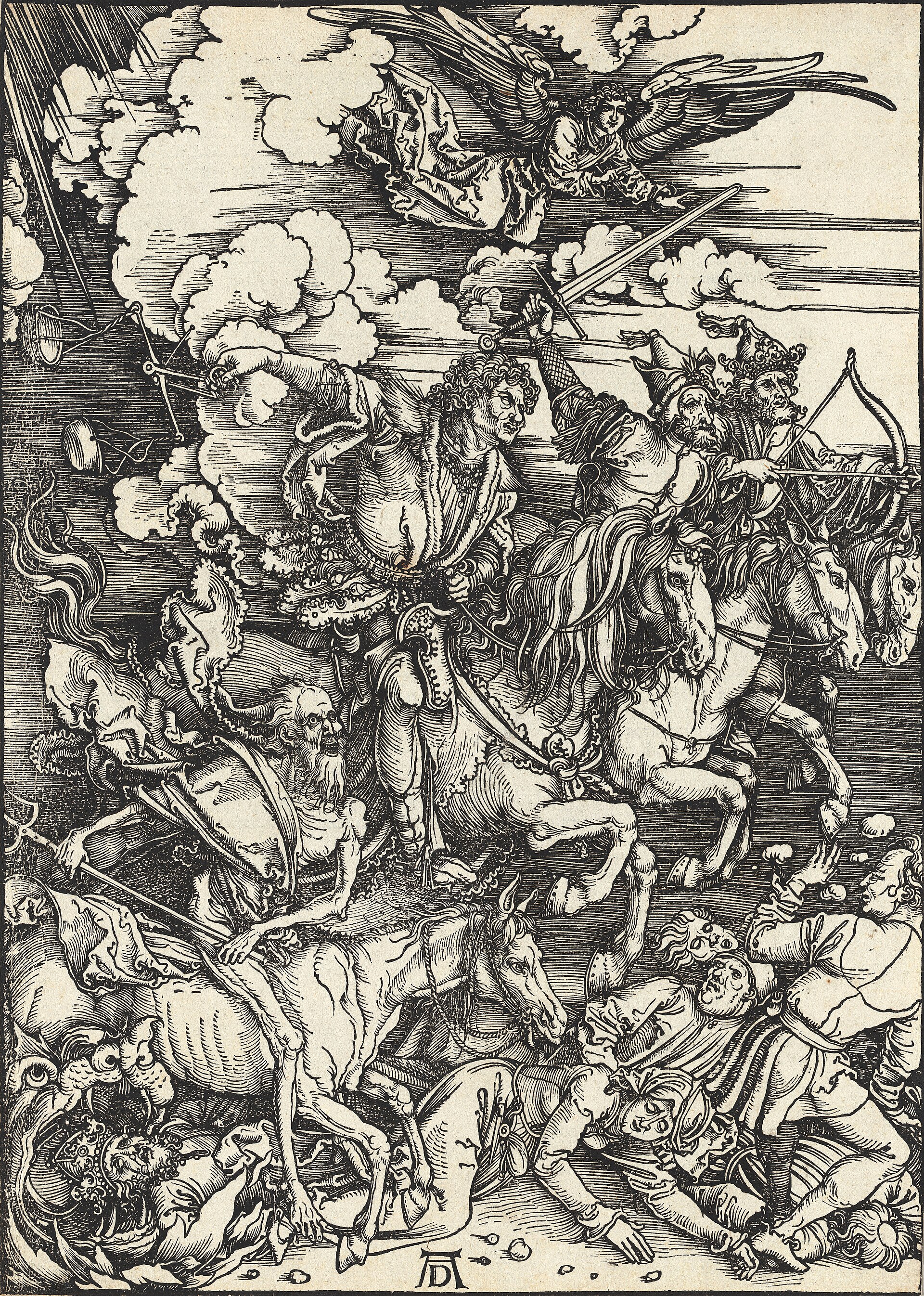
Albrecht Dürer was a master painter and printmaker who revolutionized the art of printmaking, and was one of the first artists to use printmaking as art-in-itself, rather than the historically more common practice of making prints as a way to reproduce other art, such as paintings and sculpture, or as a cheap alternative to hand-painted manuscript illumination. In comparison to his teacher Wolgemut's woodcut, which was created only five years prior, we can see that Dürer far exceeded his master's mastery of the medium -- Dürer's use of line is far more delicate and refined than his teacher's, and the result is breathtaking. His portrayal of the Four Horsemen of the Apocalypse, from the Book of Revelation, is undoubtedly one of the most iconic woodcut prints in European history. In the faces of the trampled sinners we can clearly see the anguish that we ourselves would feel if we were being mown down by the personifications of Famine, Pestilence, War, and Death.
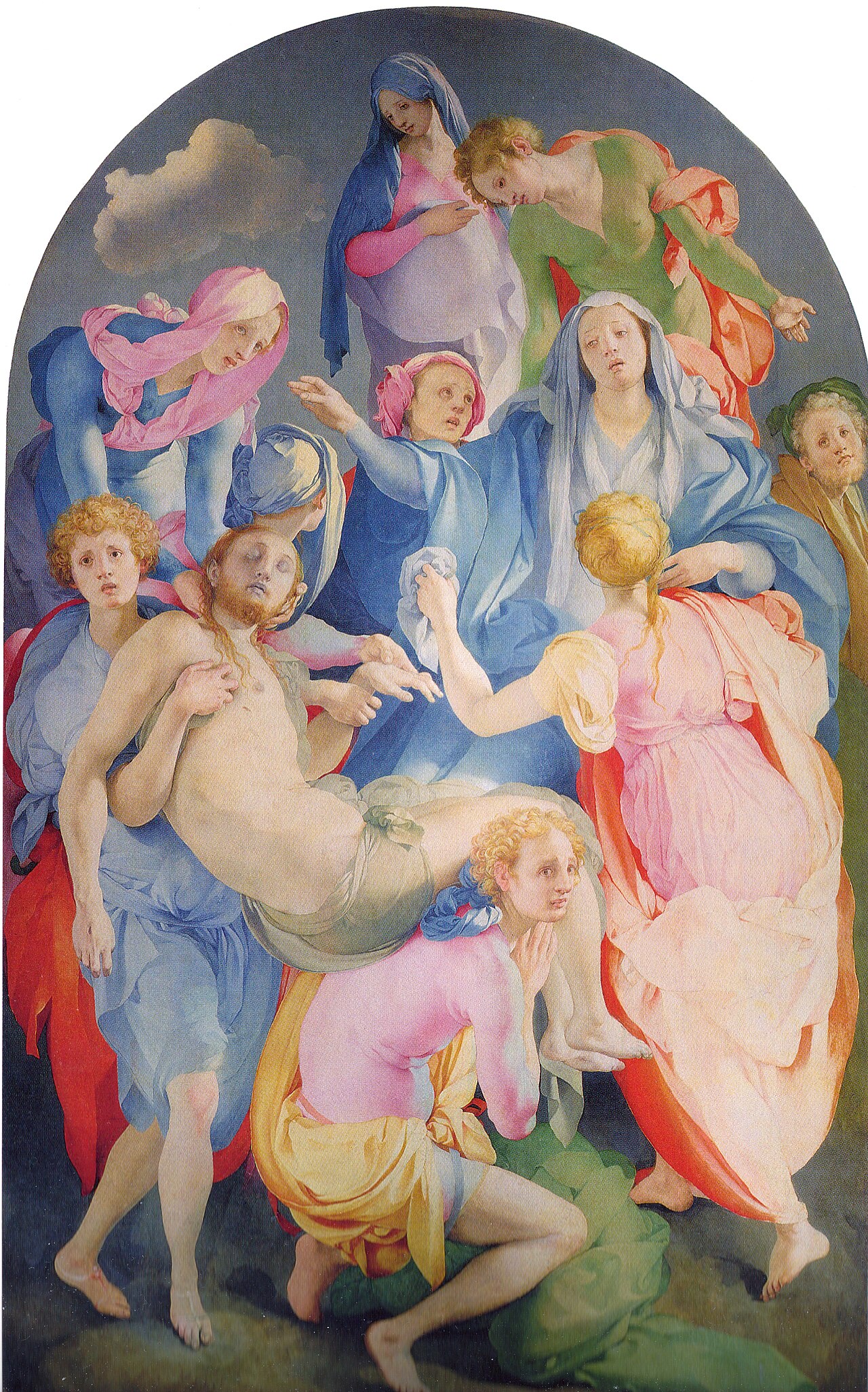
Pontormo's Deposition, or Christ's Descent from the Cross, stands in stark contrast to the tragic realism of the earlier deposition scene by van der Weyden. Painted in the style known as Mannerism, or "stylish style," the figures in this scene are beautifully otherworldly to the point of looking bizarre. Their bodies contort in abnormal ways, and the colors of their clothing are gaudy. They do not look happy, but they look more pensive or melancholic rather than wracked with grief. It is much harder to "feel" what they are feeling, because none of them look real. It is almost like a cartoon. Pontormo was not concerned with making the viewer feel the intensity of grief over Christ's death, but rather with creating a self-consciously stylish painting, and indeed, he has succeed. Despite its strangeness and gaudiness, it would be hard to argue that it is not beautifully painted. And yet it remains an odd way to depict people reacting to the dead body of their beloved Savior.
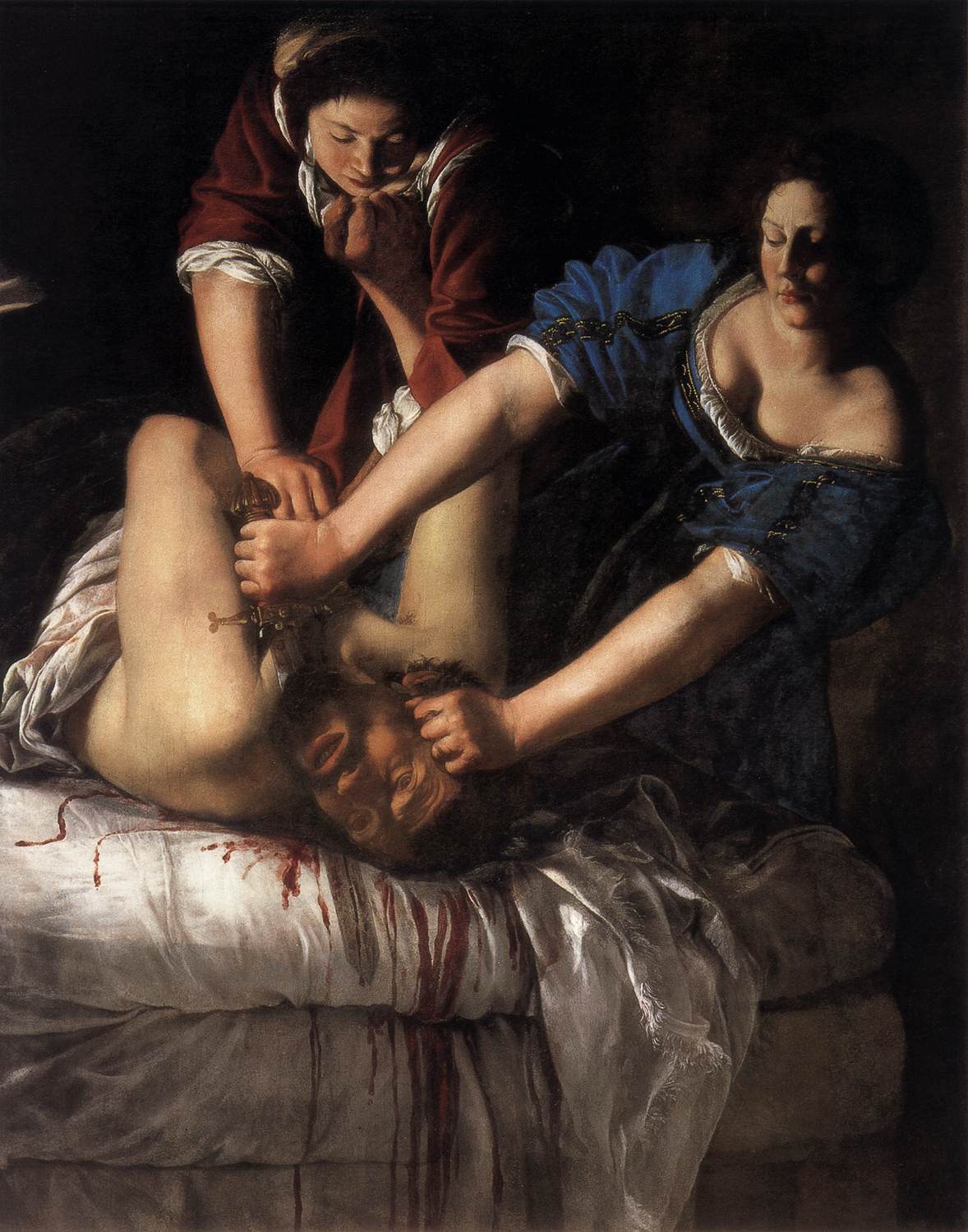
Artemisia Gentileschi was a follower of Caravaggio, and a very famous painter in her own right. Her fame spread as far as England, where she worked as a painter in the court of King Charles I. Because of her fame, she was the follower of Caravaggio who became responsible for spreading his style of dramatic naturalism throughout Europe. Gentileschi's father was also a painter, and a friend and follower of Caravaggio, and was responsible for her artistic education. The subject of this painting, Judith slaying Holofernes, was also painted by Caravaggio, but it is widely agreed that Gentileschi's is the superior painting. Gentileschi had a very difficult life, and it is clear through her paintings, and what is known of her life, that she knew from bitter experience what it feels like to be a woman who is wronged by a man, and she channels that here in the biblical story of Judith, a woman who snuck into an enemy camp with her maid to kill the general of the army that was besieging her city. Gentileschi's treatment of the tale is wonderfully gory, and she has painted the women as heroic figures, fully engaged in the bloody task at hand.
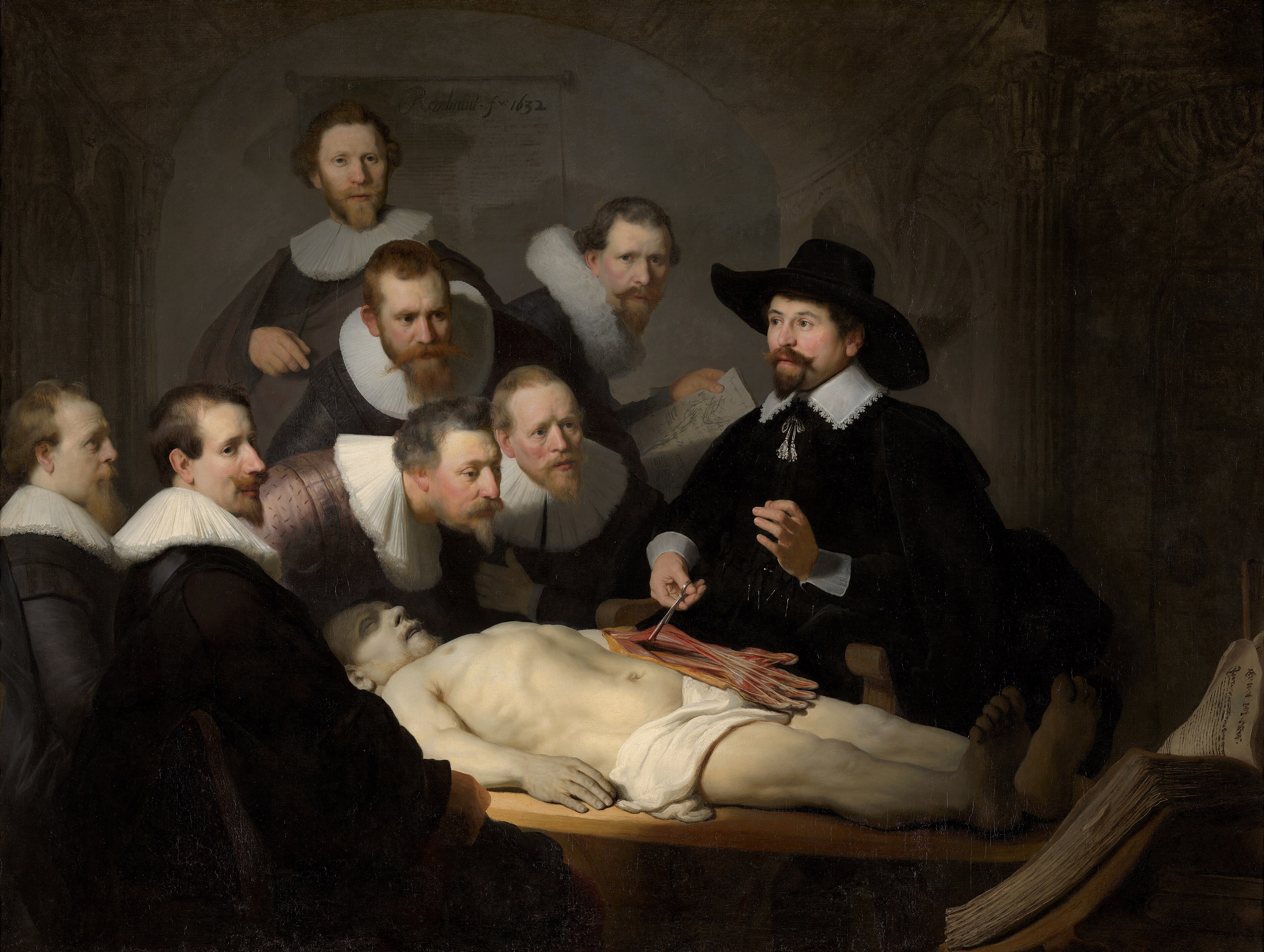
This group portrait by Rembrandt was groundbreaking in its time because Rembrandt was able to master group portraits that not only were beautifully-made portraits of the individuals, but also visually appeared to be a group of people, not just a collection of different portraits on the same canvas. Other group portraits of the time were not able to capture the subtleties of creating a believable image of a group of people actually interacting with each other. Group portraits were a common type of commission for artists in the Dutch Republic at this time, because guilds and other established groups, such as militias, would decorate their halls with portraits of their most important members. Dr. Tulp was the head of the Amsterdam Surgeon's Guild at the time the portrait was painted, and he is shown teaching anatomy to his fellow surgeons. Human dissection was an essential part of the educational process for surgeons during this time, as it still is today.