Aspects of European life in the Renaissance, Reformation, and Baroque periods depicted in this room include a formal contract ceremony, a mother (Mary, Mother of God) lovingly caring for children, a surreal scene of debauchery in a garden, well-to-do Italian sisters playing chess together, a saint having an orgasmic vision, and a peaceful domestic scene of a housemaid pouring milk into a bowl. Life in these periods was deeply religious, with piety, or the display of it, an essential aspect of daily life. Following the Protestant Reformation, Europe was split along Catholic-Protestant divides, with much of Northern Europe staunchly Protestant, while France and Italy, among other countries and regions, remaining Catholic. This divide had a profound impact on the subject matter and economy of art, as in places that were still firmly Catholic, Christian themes remained the primary subject matter of artists' livelihoods, while in Protestant areas, where religious art was now considered potentially blasphemous, commissions began to instead come from other forms of organizations, such as guilds, and private patrons, many from the growing middle class. In large, prosperous cities there was also a burgeoning art market, and we see for the first time in Europe artists who would paint without being commissioned, and put the paintings up for sale in shops, as is now the dominant form of making a living from art today.
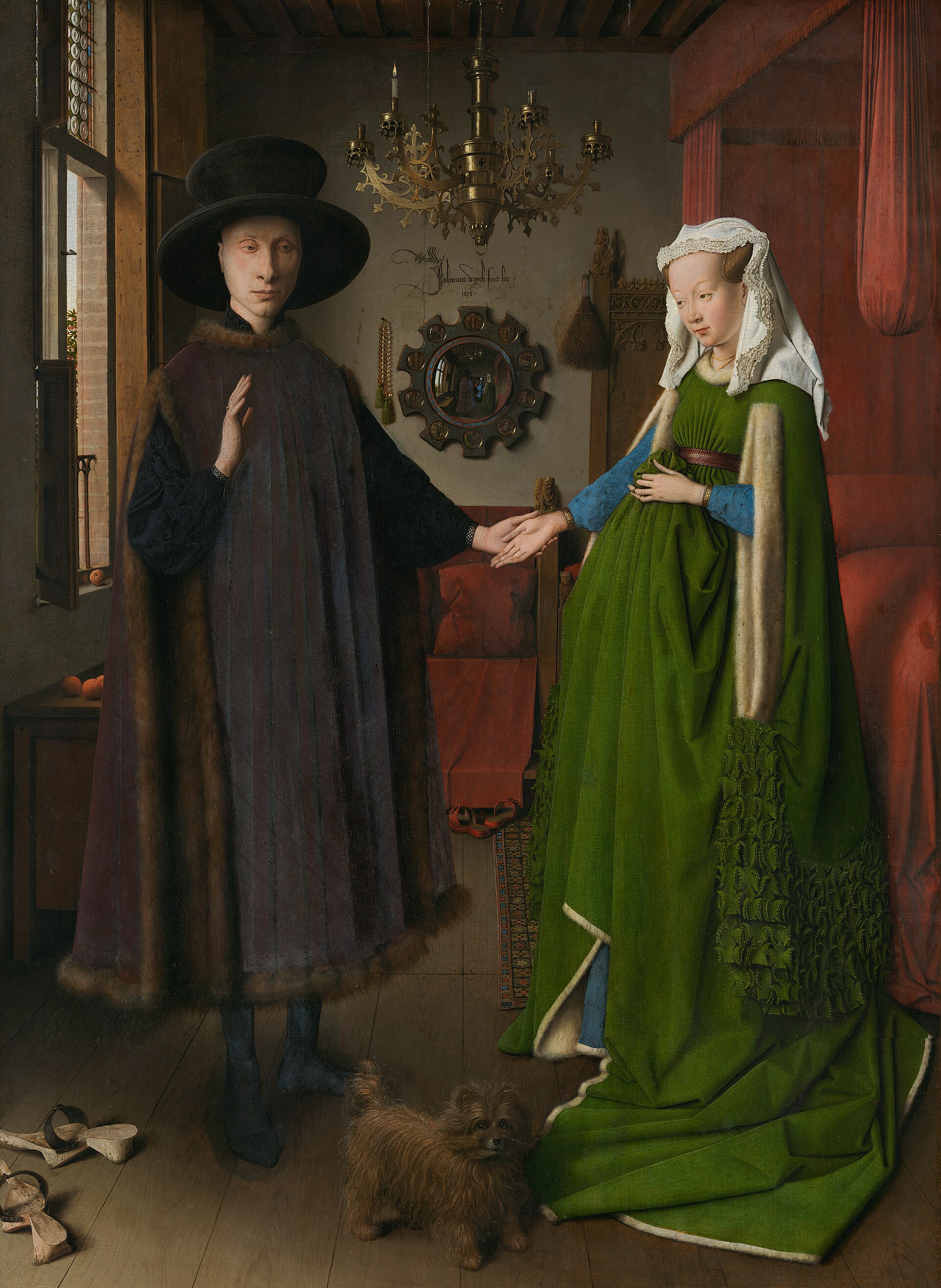
This painting, made by Jan van Eyck in 1434, has been the subject of much speculation by art historians over the years. Many consider it to be a wedding portrait, but this is not certain. Jan van Eyck signed the painting with the words "Johannes ve eyck fiur hir, 1434" which translates to "Jan van Eyck was here." Most paintings during this time period would have been signed with the words "[Artist] made this," not "was here," which has led historians to believe that the painting itself functions as some kind of contract document, although why, or exactly what type of contract it would be, remains a mystery. It could be a betrothal ceremony, or a wedding. Reflected in the centrally located mirror are at least two other figures besides the subject, one probably being Jan van Eyck himself, and the other speculated to be perhaps the viewer, or another witness to whatever ceremony is being performed. Other clues to the nature of the event include a dog, a symbol of fidelity, and a chandelier without only one candle, perhaps representing the divine light of God.
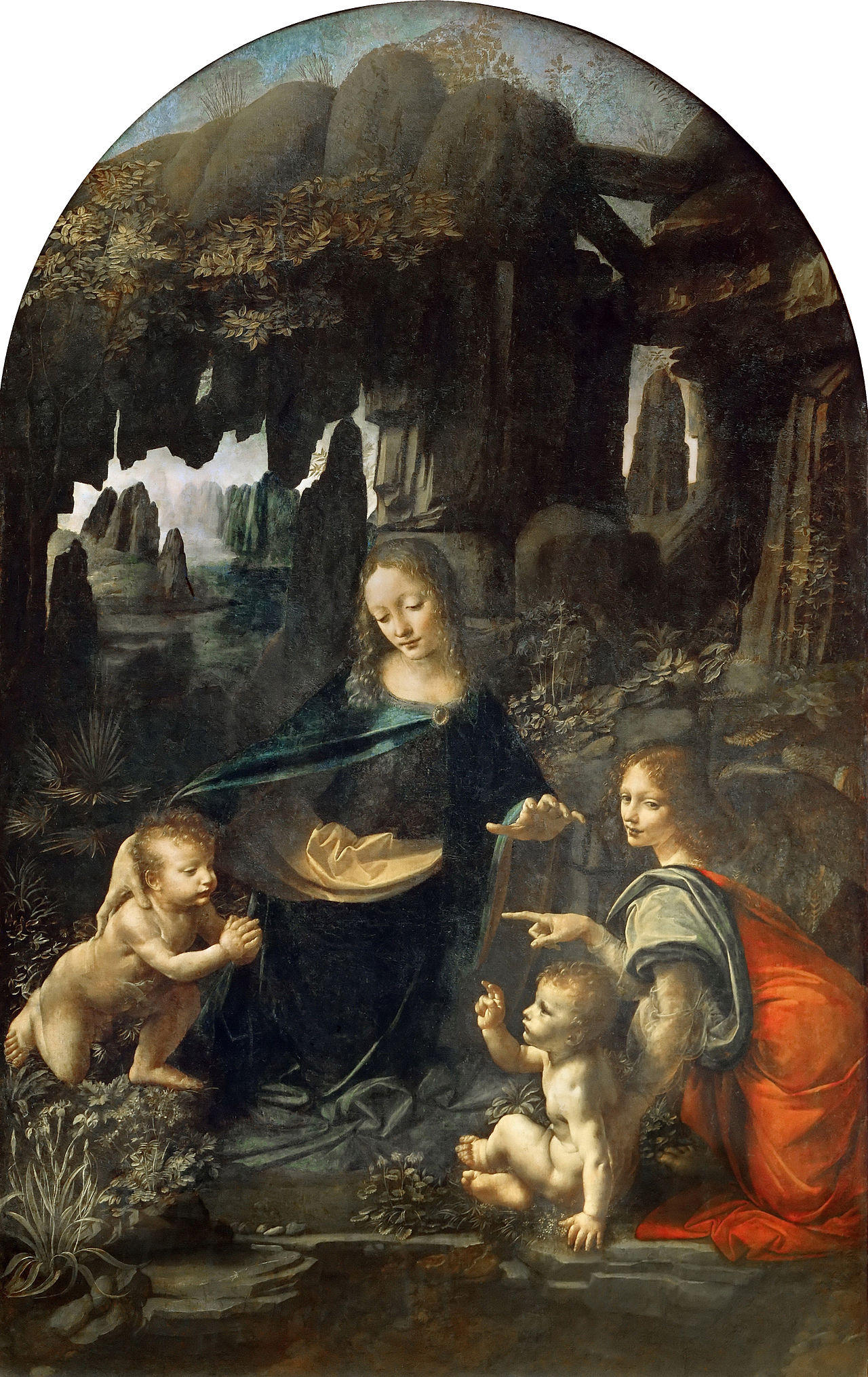
Leonardo da Vinci's ethereal painting of Mary, Mother of God, with the infant Jesus and John the Baptist and an angel in a grotto, is one of two versions of the same painting, both painted by da Vinci. Here we can see da Vinci's mastery of chiaroscuro, contrast between light and dark, and sfumato, a smoky, hazy style of painting that gives the painting a dreamlike feeling. Da Vinci has beautifully depicted motherly love and protection over the children in her care. He placed the figures in an imaginary grotto, a location that could not have possibly factored into the actual life of Jesus, but rather one that held meaning in the Italian context as an almost magical, otherworldly setting, certainly a fit for members of the Holy Family.
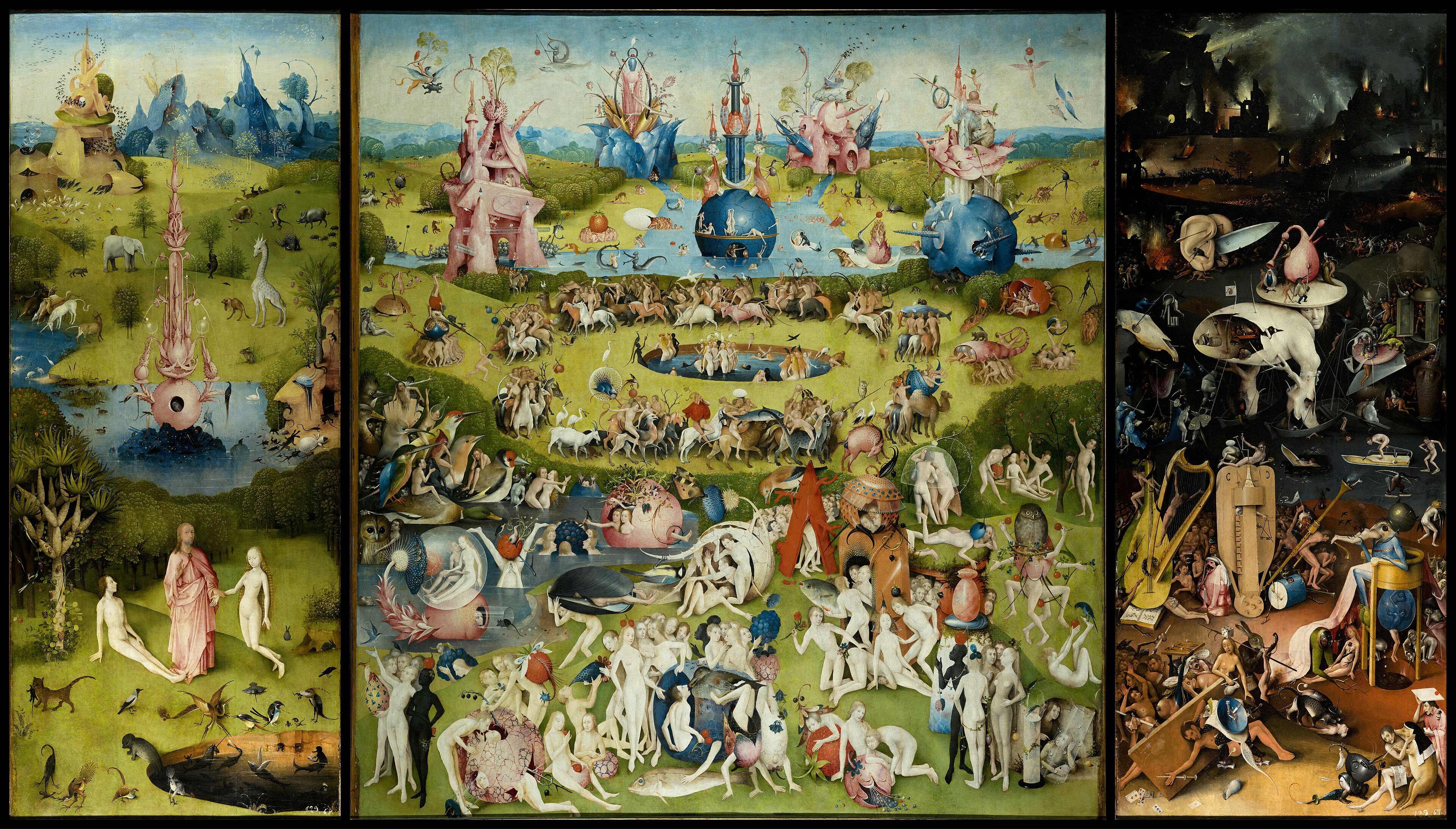
This complex and enigmatic painting by Hieronymus Bosch is undoubtedly one of the most famous paintings in all of human history. Painted around the year 1500, which was considered a possible date for the second coming of Christ, the subject matter is steeped in anxieties about sin, redemption (or lack of redemption), and salvation (or the impossibility of salvation). The triptych is in the style of an altarpiece, but was certainly not used in a public church, because of its unusual subject matter, rife with nudity, debauchery, bizarre creatures, and sexual activity. The left panel depicts the Garden of Eden, with God, Adam and Eve as the focal point of a relatively calm scene, but even in Paradise, Bosch has chosen to depict strange otherworldly creatures fighting and preying upon each other. The large central panel is thought to depict a sort of funhouse-mirror view of sensual pleasure on Earth. Nearly every human figure is naked, except those clothed with shells, fruits, or other non-clothing items. Many of the people appear to be engaged in sexually pleasurable activities, and there a giant fruits and birds and monstrous animals everywhere. The right panel depicts Hell. No one appears to be having a good time there. Interestingly, huge musical instruments are the most immediately recognizable torture apparatuses, perhaps because of music's association with leisure and enjoyment, dancing and drinking.
you can listen to the music painted on the man's butt here
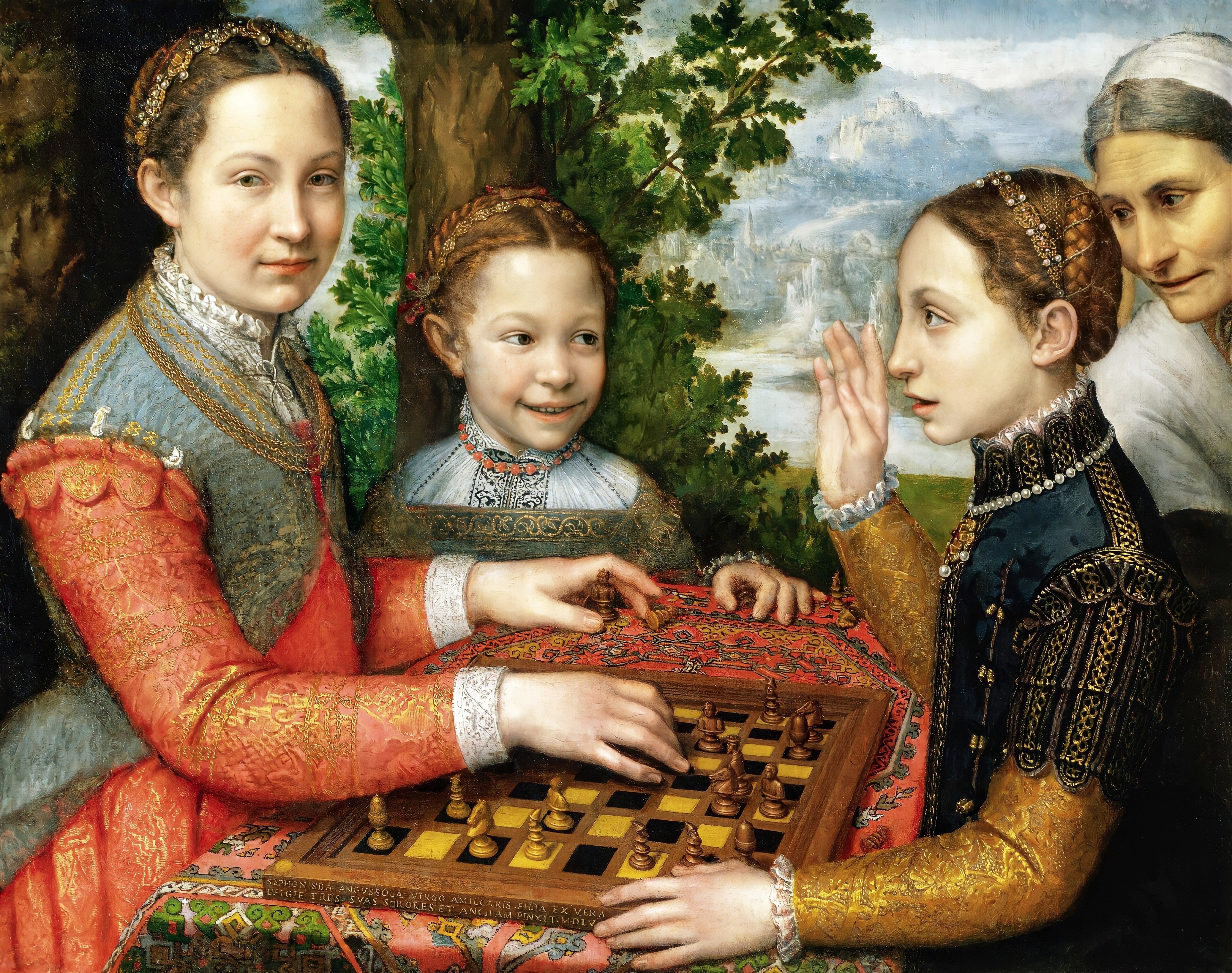
Sofonisba Anguissola was an extremely well-regarded painter during her lifetime, and one of very few well-known female painters from the High Italian Renaissance period. She was a contemporary of, and in correspondence with, the great master Michelangelo, to whom she sent drawings. This painting is what is known as a "genre painting," a scene from everyday life, in contrast to religious art, which depicts holy figures and scenes from the Bible. It shows three of her sisters, two engaged in a game of chess, while the younger one watches, all three looked after by their governess. The sisters are richly and beautifully dressed, and Anguissola has masterfully rendered the embroidery and patterning on the textiles of their clothes, and the cloth covering the table that the chess board sits on. The girls appear active, dynamic, and highly educated, as chess is a notoriously difficult game to master, and was at the time considered a "man's game." Anguissola has also signed the painting, in Latin, on the side of the chessboard, a perhaps not-so-subtle hint to the viewer that she was the recipient of a humanist education and could read and write in Latin, something few women at the time were able to do.
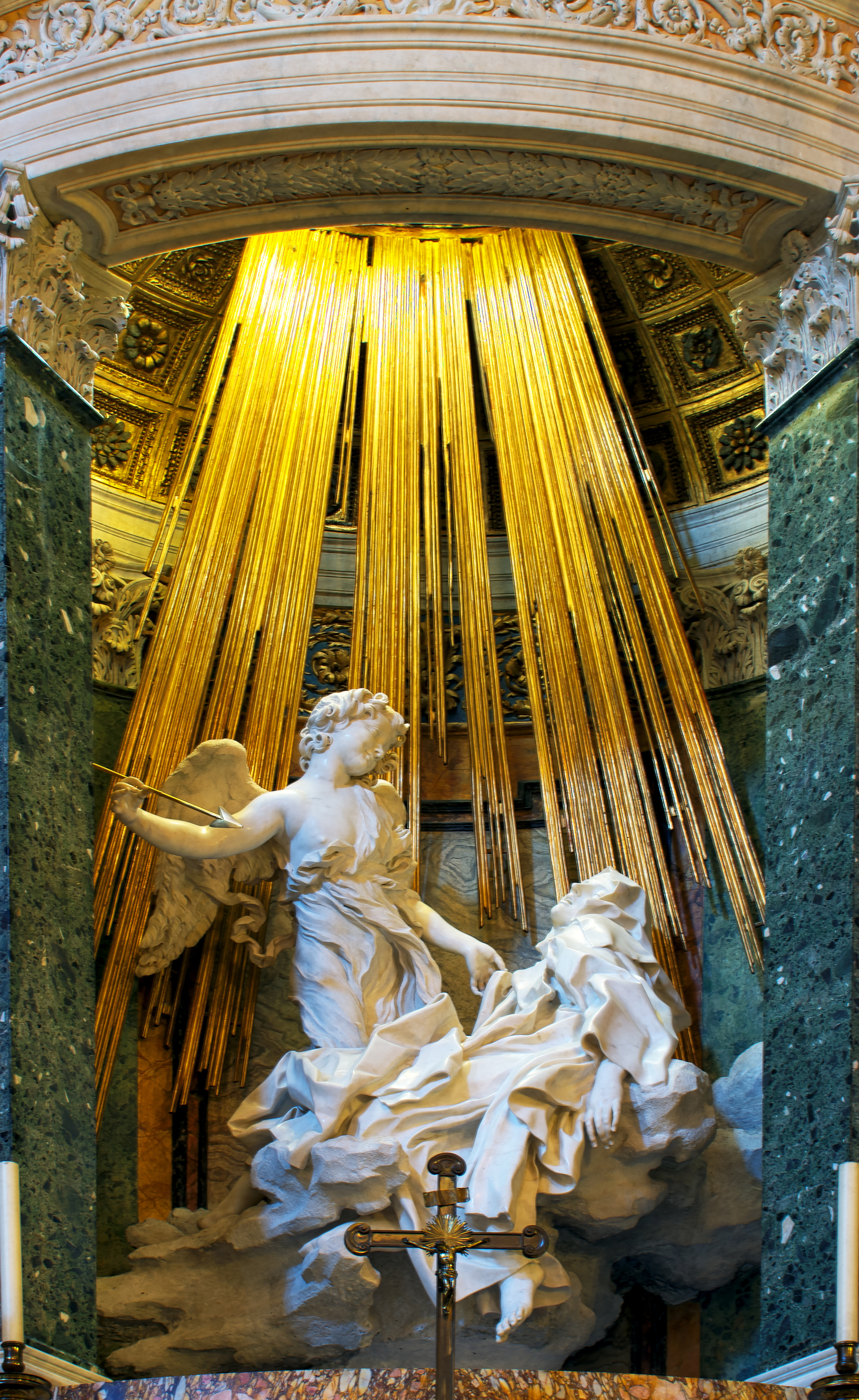
This sculpture of the recently canonized Saint Teresa having one of her ecstatic visions is clearly recognizable to the modern viewer as a portrayal of sexual ecstasy, although whether or not Bernini considered it to be a representation of such feeling is beyond the scope of this exhibit. Regardless of if the viewer chooses to interpret Saint Teresa's experience as both religious and sexual, or purely religious, Bernini has undeniably created a masterful representation of a visceral human experience that is beautiful, and intense, to witness. The sculpture, and its surrounding architecture, were designed to create a highly engaging, all-encompassing religious experience, so that the viewers can feel as if we are witnessing, and sharing in, her miraculous vision. The scene is presented exactly as Saint Teresa described one of her visions in her writing on the topic.
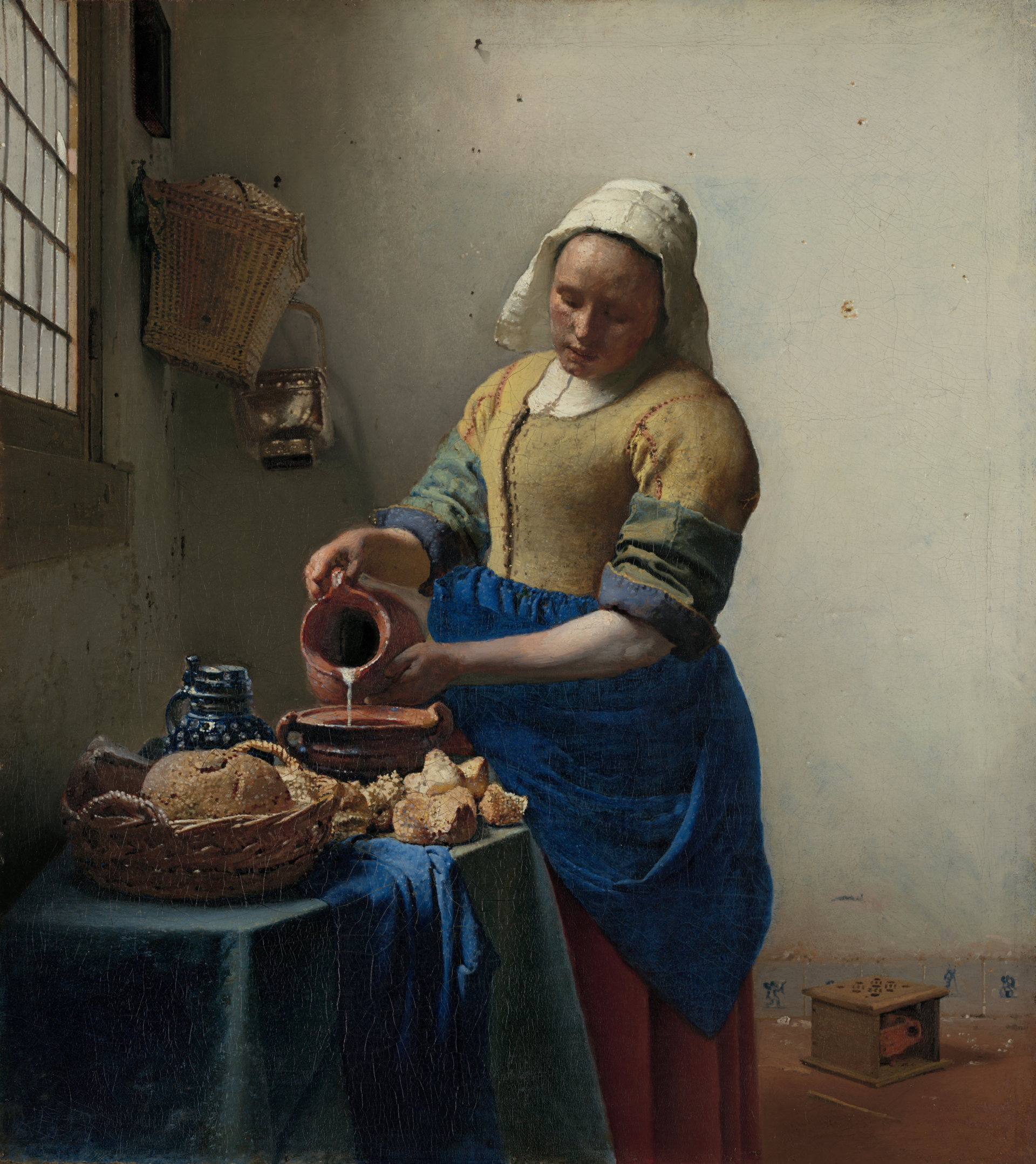
The Maid Pouring Milk by Johannes Vermeer, also known as The Milkmaid, is a peaceful domestic scene depicting a young woman serenely pouring milk from a pitcher into a bowl. She appears strong, and the milk she pours is life-giving and sustaining. The horizon line of the painting is low, so that the viewers feel as if we are looking up to her. The lighting is soft, natural daylight, and the simple room is decorated with delft tiles, a style of earthenware that the Dutch Republic was known for. She is dressed in soft jewel tones, and the whole scene creates a feeling of quiet abundance. But there could be some deeper symbolism at work beneath the apparently serene painting of a working woman. The foot warmer on the floor is thought to be a symbol of female sexual desire, as when placed under a woman's skirt, it creates warmth below her waist.